Is the Black Mold in Your Orange County Home Making Your Family Sick?
For many homeowners in Irvine, Anaheim, and Huntington Beach, the discovery of dark, slimy patches on a bathroom wall or behind a leaking cabinet feels like an alarm going off — and rightly so. The real question isn’t just whether you have mold, but whether that mold is Stachybotrys chartarum — commonly called black mold — and what it’s doing to your family’s health right now. Black mold health effects range from mild irritation to serious respiratory illness, and the longer it goes unaddressed, the worse the situation becomes for both your household and your property.
This article is written for Orange County homeowners who want straight answers: what black mold actually is, how to tell if you have it, what the health risks look like, and how to get it removed safely. We’ll also cover the cost of professional remediation in Southern California, when it makes sense to call a certified contractor versus handling a small problem yourself, and what to look for in a remediation company. Whether you’re in Costa Mesa, Fullerton, or Yorba Linda, the information here applies directly to the climate and housing conditions you deal with every day.
What Is Black Mold and Why Is Stachybotrys Different?
Not every dark mold you see is Stachybotrys chartarum. Several common mold species — including Cladosporium, Aspergillus, and Penicillium — can appear dark or greenish-black. The term “black mold” has become shorthand for Stachybotrys in the public consciousness, but color alone is not a reliable identifier. What makes Stachybotrys genuinely different is its biology and the conditions it thrives in.
How Stachybotrys Grows
Stachybotrys chartarum is a slow-growing mold that requires prolonged, sustained moisture to establish itself. It colonizes materials high in cellulose — drywall paper, ceiling tiles, wood framing, cardboard — that have been wet for at least 72 hours. This is why it so frequently appears after a plumbing leak that went undetected for days, or following a flood event where structural materials weren’t dried quickly enough. In Orange County’s coastal communities like Newport Beach and Huntington Beach, high ambient humidity from ocean air can compound the problem, especially in poorly ventilated crawlspaces or older home construction without proper vapor barriers.
What Black Mold Looks Like
Stachybotrys typically appears as a dark greenish-black growth with a slimy or wet texture when active. As it dries, it can become powdery and easier to disturb — which is actually when it becomes more dangerous, since dry spores become airborne more readily. If you see this type of growth alongside a musty, earthy odor and a history of water intrusion, you should treat it as a serious concern until proven otherwise by laboratory testing.
Black Mold Health Effects: What the CDC and EPA Say
The CDC is careful to note that while black mold exposure can cause significant health problems, the scientific community has not established a definitive causal link between Stachybotrys specifically and severe systemic illness in all exposed individuals. That said, the EPA is unequivocal: any mold growth indoors should be addressed promptly, and sensitive populations face very real risks from prolonged exposure.
Common Symptoms of Mold Exposure
The most frequently reported black mold health effects include chronic nasal congestion and runny nose, persistent coughing or wheezing, skin irritation and rashes, red or watery eyes, and recurring headaches. In households with children, elderly residents, or anyone with asthma or an immunocompromised condition — common in retirement communities in Laguna Woods or family neighborhoods in Garden Grove — these symptoms can escalate quickly. Some individuals develop hypersensitivity pneumonitis, a serious inflammatory lung condition that can be mistaken for pneumonia.
Mycotoxins: The Real Concern
What sets Stachybotrys apart from many other mold species is its capacity to produce mycotoxins — specifically trichothecenes — under certain conditions. These are toxic compounds that can be inhaled, ingested, or absorbed through the skin. Mycotoxin exposure has been associated in research literature with neurological symptoms, fatigue, cognitive impairment, and immune suppression. It’s important to note that not every Stachybotrys colony produces mycotoxins at dangerous levels, but the potential is real enough that remediation should never be taken lightly or delayed.
How to Identify Black Mold in Your Home
Where to Look First
In Orange County homes, black mold most commonly appears in bathrooms with inadequate ventilation, under sinks with slow or hidden leaks, behind drywall near exterior walls in older construction, in attic spaces with roof leaks, and in crawlspaces beneath homes in areas like Brea and Yorba Linda where ground moisture can seep upward. After any significant water damage restoration event — whether from a broken pipe, an appliance leak, or storm intrusion — mold can begin developing within 24 to 48 hours.
DIY Testing vs. Professional Air Quality Testing
Over-the-counter mold test kits are widely available and inexpensive, but they have significant limitations. They can confirm that mold spores are present — which is almost always true in any environment — but they cannot reliably identify species, quantify spore counts, or pinpoint the source of contamination. A professional environmental hygienist or certified mold inspector uses air sampling, surface swab testing, and bulk material sampling, with laboratory analysis through AIHA-accredited labs. In a Santa Ana apartment building or a Fullerton townhome, this level of precision matters before spending thousands on remediation.
Safe Mold Removal: DIY vs. Professional Remediation
When Small Problems Can Be Handled Yourself
The EPA generally considers mold affecting less than 10 square feet of surface area manageable for a careful, informed homeowner. This might apply to a small patch of mold on a bathroom tile grout line or a minor surface growth on a window frame. If you choose to handle it yourself, use N-95 respirator protection, nitrile gloves, and eye protection. Clean hard, non-porous surfaces with an EPA-registered antimicrobial solution, bag all materials, and address the moisture source immediately. Do not use bleach on porous surfaces like drywall — it does not penetrate effectively and leaves moisture behind.
When You Must Call a Professional
Any mold growth exceeding 10 square feet, any suspected Stachybotrys, mold within HVAC systems, or mold discovered after a significant water intrusion event requires professional mold removal by a certified contractor. Attempting DIY remediation on a large colony or inside wall cavities almost always spreads contamination rather than containing it, turning a $2,000 problem into a $10,000 one. Professional remediators follow the IICRC S520 Standard for Mold Remediation — the industry benchmark published by the IICRC — which establishes containment, air filtration, removal, and clearance testing protocols.
Risks of Ignoring Mold or Doing It Wrong
Homeowners in Anaheim and Costa Mesa who discover mold and paint over it, or who remove visible growth without addressing the moisture source, are setting themselves up for a much larger problem within weeks. Mold that isn’t fully remediated regrows rapidly. More seriously, disturbing a large mold colony without proper containment — negative air pressure, polyethylene barriers, HEPA air scrubbers — releases millions of spores into living areas, dramatically increasing health exposure for everyone in the home. Improperly remediated mold can also become a serious liability during a home sale, as buyers increasingly request mold inspections in Orange County’s competitive real estate market.
What Professional Mold Remediation Actually Involves
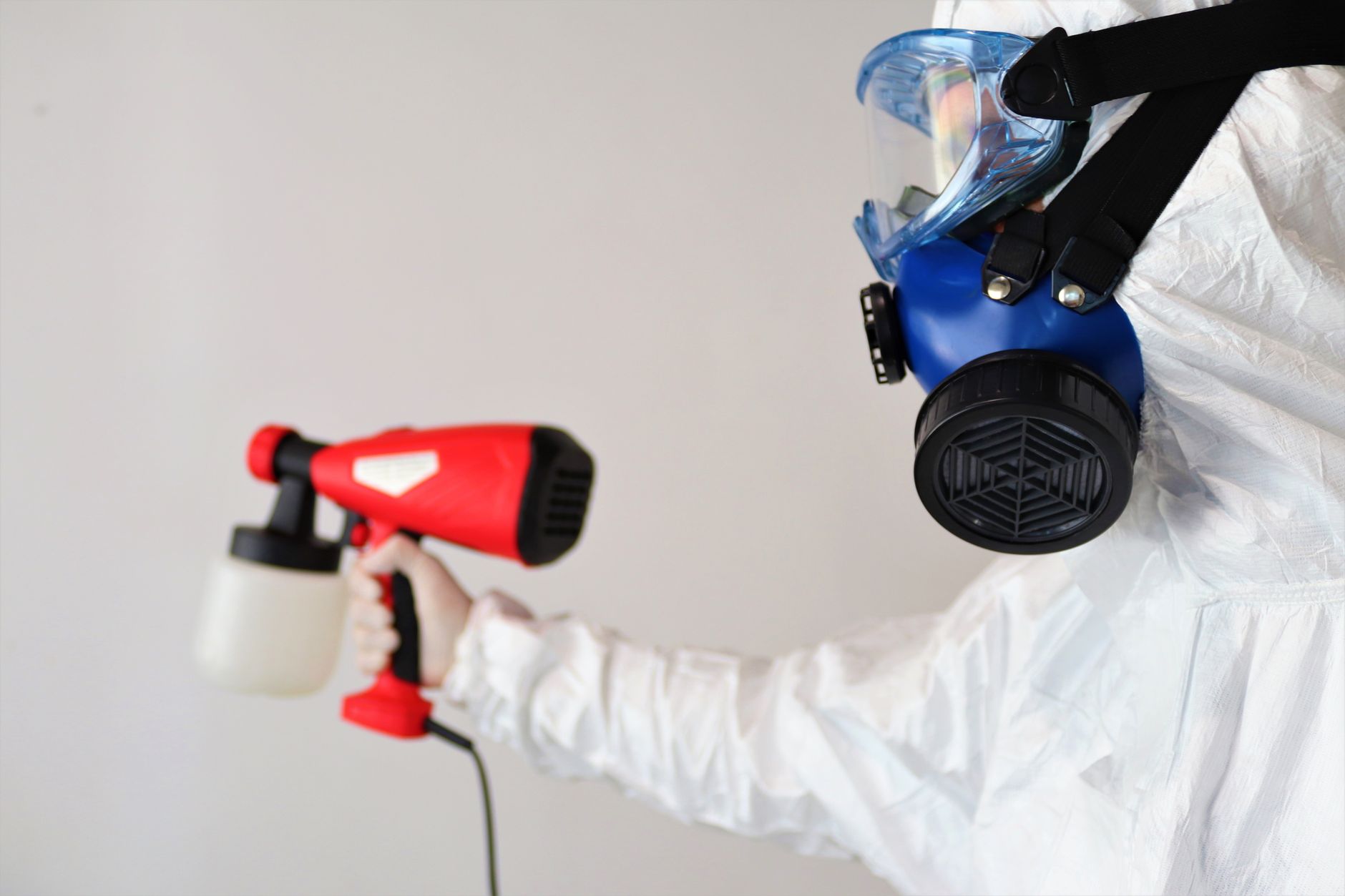
A properly executed professional remediation is a multi-step process that goes far beyond wiping down surfaces. IICRC-certified technicians begin with containment — sealing off the affected area with polyethylene sheeting and establishing negative air pressure using commercial HEPA air scrubbers to prevent cross-contamination. Moisture meters and thermal imaging cameras identify hidden moisture pockets inside walls and under flooring that would otherwise be missed. Affected porous materials — drywall, insulation, subflooring — are removed and properly disposed of. Structural surfaces are HEPA-vacuumed and treated with antimicrobial agents. Commercial dehumidifiers run continuously to bring structural moisture levels down to safe thresholds. The process concludes with post-remediation clearance testing by an independent inspector to verify the environment is safe before reconstruction begins.
In Orange County, professional mold remediation typically costs between $1,500 and $6,000 for moderate containment cases. Extensive mold involving structural materials, HVAC systems, or multiple rooms can run $8,000 to $15,000 or higher. Homeowners’ insurance may cover remediation costs if the mold resulted from a covered water loss — always document thoroughly and report to your insurer before work begins.
Companies Orange County Homeowners Research for Mold Remediation
When searching for mold remediation help, many homeowners encounter national franchise names. It’s worth understanding what each offers and where local specialists fit in.
SERVPRO operates through local franchises and is widely recognized for water and mold response. Quality varies by franchise ownership and staffing. ServiceMaster Restore similarly offers mold remediation through a national network with local operators. PuroClean markets itself as a more boutique franchise option with emphasis on customer communication. BELFOR Property Restoration is a large international firm with commercial and residential capabilities, often handling large-loss claims for insurance carriers.
Each of these companies provides a legitimate service, and their name recognition comes from consistent national marketing. However, many Orange County homeowners find that a locally owned, IICRC-certified company offers faster response times, more direct communication with project managers, and competitive pricing without franchise overhead built into every estimate.
Why Orange County Homeowners Choose Ready Restore OC
- IICRC-certified technicians trained in the S520 Mold Remediation Standard and S500 Water Damage Restoration Standard
- Full containment setup with HEPA air scrubbers and negative air pressure on every mold job
- Moisture meter and thermal imaging inspection to locate hidden moisture sources before remediation begins
- Commercial-grade dehumidification equipment for complete structural drying
- Coordination with independent industrial hygienists for post-remediation clearance testing
- Direct insurance billing assistance — we work with your adjuster, not around them
- Same-day and emergency response throughout Orange County: Irvine, Anaheim, Newport Beach, Huntington Beach, Fullerton, Brea, Garden Grove, Costa Mesa, Santa Ana, Yorba Linda, and surrounding communities
- Transparent, itemized estimates before any work begins — no surprise charges
If you’re not sure whether you have a mold problem or you’ve already spotted something concerning, the smartest first step is an inspection. Request an inspection from Ready Restore OC and get a clear picture of what you’re dealing with before making any decisions.
Frequently Asked Questions About Black Mold
How do I know if I have Stachybotrys or just regular mold?
You cannot reliably determine mold species by appearance alone — laboratory testing through surface swabs or air sampling sent to an accredited lab is required for accurate identification. If the mold is dark, slimy, and associated with a long-term moisture problem, it warrants professional evaluation regardless of species. Treating any significant mold growth as a serious concern is the safest approach.
Can black mold make you sick even if you don’t see a lot of it?
Yes. Mold growing inside wall cavities, under flooring, or in HVAC systems can expose occupants to significant spore and mycotoxin levels without any visible growth being apparent. If household members are experiencing persistent respiratory symptoms, fatigue, or headaches with no clear medical explanation, a professional air quality assessment is worth pursuing, especially if there’s any history of water intrusion in the home.
How long does professional mold remediation take?
Most residential mold remediation projects in Orange County take between two and five days, depending on the extent of contamination and the materials involved. Structural drying after remediation may extend the timeline by several additional days. Your remediation contractor should provide a clear project timeline in writing before work begins, so you can plan accordingly.
Will my homeowners insurance cover mold remediation?
Coverage depends on the cause of the mold. If the mold resulted from a sudden, covered water loss — such as a burst pipe or appliance failure — most standard homeowners policies in California will cover remediation costs subject to your deductible. Mold resulting from long-term neglect, deferred maintenance, or gradual leaks is typically excluded. Document everything thoroughly and contact your insurer before authorizing any work.
Is it safe to stay in my home during mold remediation?
For small, contained projects in a single room, temporary displacement may not be necessary. However, for larger remediation jobs involving multiple areas, HVAC contamination, or Stachybotrys, your remediation contractor will typically recommend that sensitive individuals — children, elderly residents, anyone with respiratory conditions — vacate during active work. Your certified technician should give you specific guidance based on your home’s layout and the scope of the project.
Contact Ready Restore OC
Ready Restore OC
2771 Saturn St STE D, Brea, CA 92821
Phone: (714) 464-8246
Email: service@readyrestoreoc.com
Website: https://readyrestoreoc.com